
- Professional Step, Stair & Stoop Services
Professional Steps & Stoops Installation and Repair in New Jersey
Exterior steps and stoops are used every day and are constantly exposed to foot traffic, moisture, temperature changes, and normal material wear.
- Over time, concrete can crack, mortar joints can deteriorate, bricks or stones may loosen, and entire sections can begin to settle or move. What starts as a small cosmetic problem can eventually affect the stability, usability, and appearance of the entrance.
- On Top Masonry & Construction provides professional steps, stairs, and stoop repair, restoration, rebuilding, and installation using concrete, brick, natural stone, block, and other masonry materials.
Whether you have cracked front steps, loose masonry, uneven stairs, a sinking stoop, or an entrance that needs complete rebuilding, we evaluate the existing condition first and recommend the appropriate solution.
Get Your Free Quote Today
Request a Steps & Stoops Estimate
Contact our team to discuss your entrance and request an estimate.
Signs Your Exterior Steps May Need Repair
Common Steps & Stoops Problems
Damage to exterior steps and stoops can appear in different ways depending on the material, age, and underlying condition. Common problems include
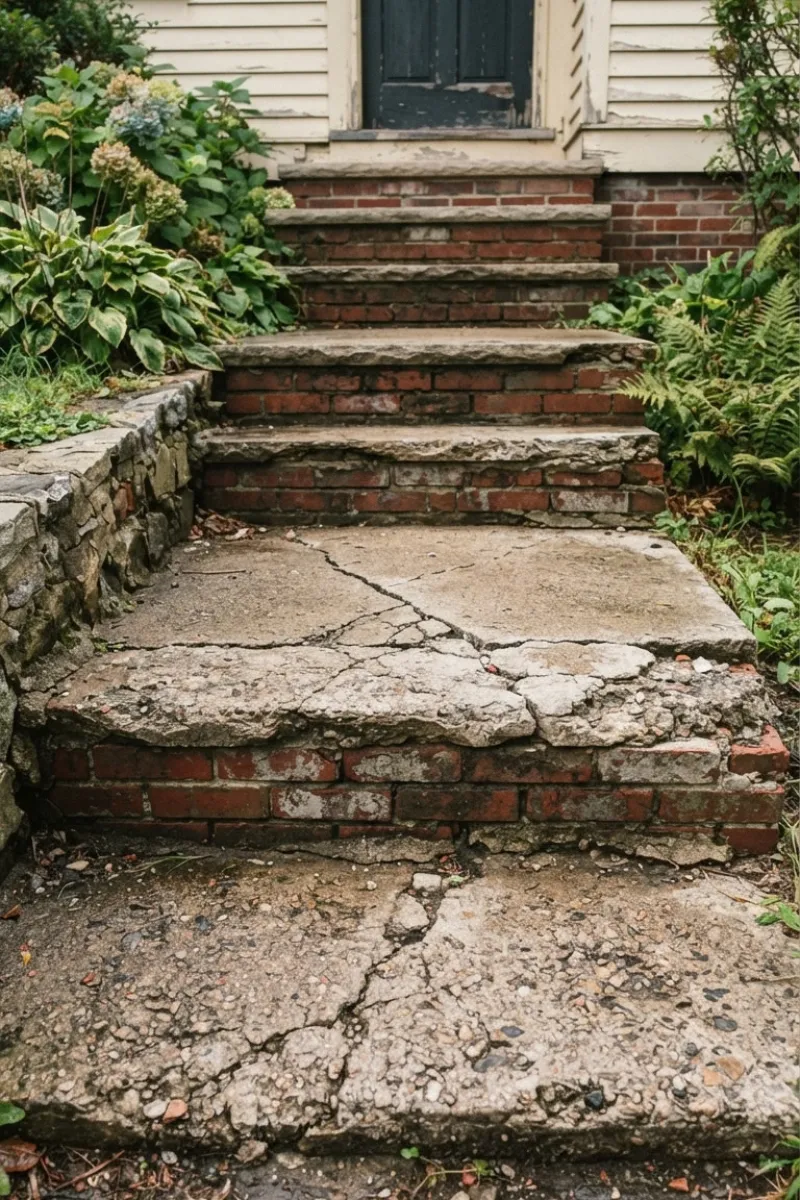
Cracked Steps
Cracks may develop through concrete, masonry units, mortar joints, or landing surfaces.
A small stable crack may require localized repair, while widening or recurring cracks may indicate movement that needs further attention.
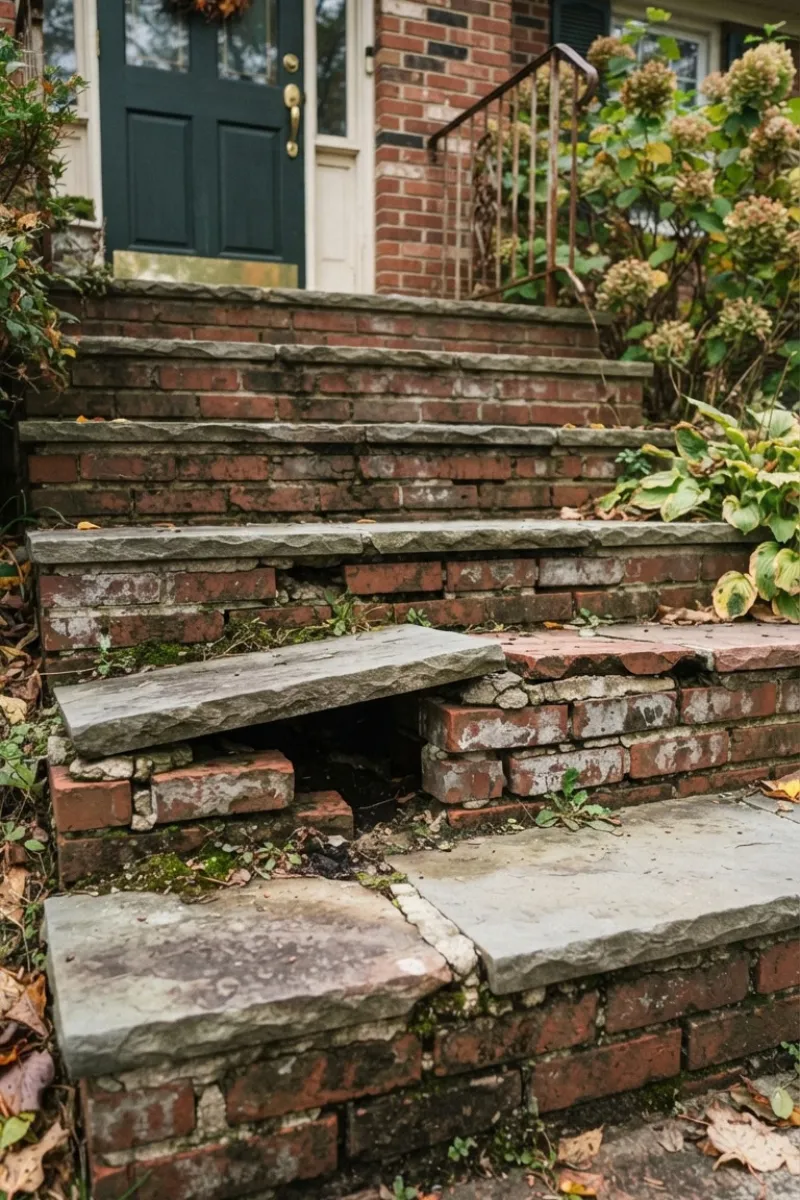
Loose Brick or Stone
Individual bricks, blocks, or stones can loosen when mortar deteriorates or surrounding masonry begins to move.
Loose masonry should be repaired before additional sections become unstable.
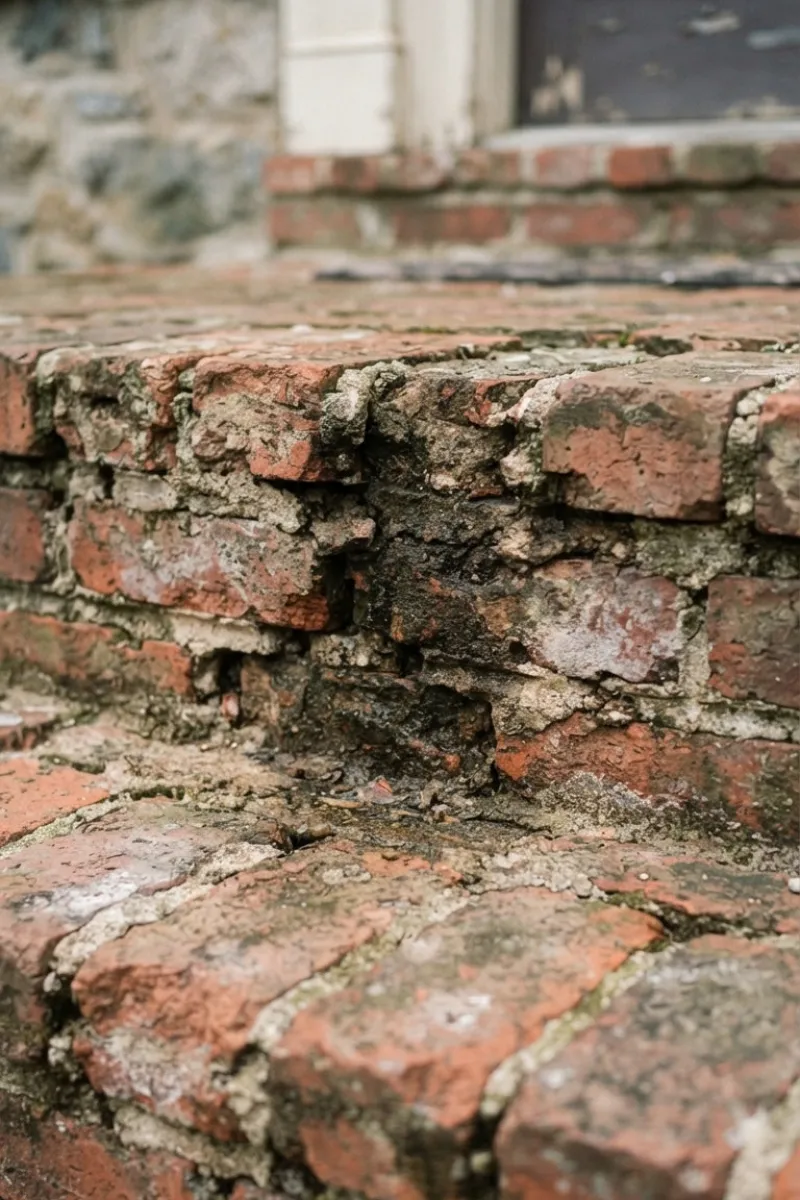
Crumbling Mortar Joints
Mortar can wear away between bricks, blocks, or stone.
Typical signs include
- Missing mortar
- Powdering joints
- Open gaps
- Recessed joints
- Loose masonry
- Moisture entering weakened areas
Where the surrounding masonry remains sound, repointing can help restore the joints.
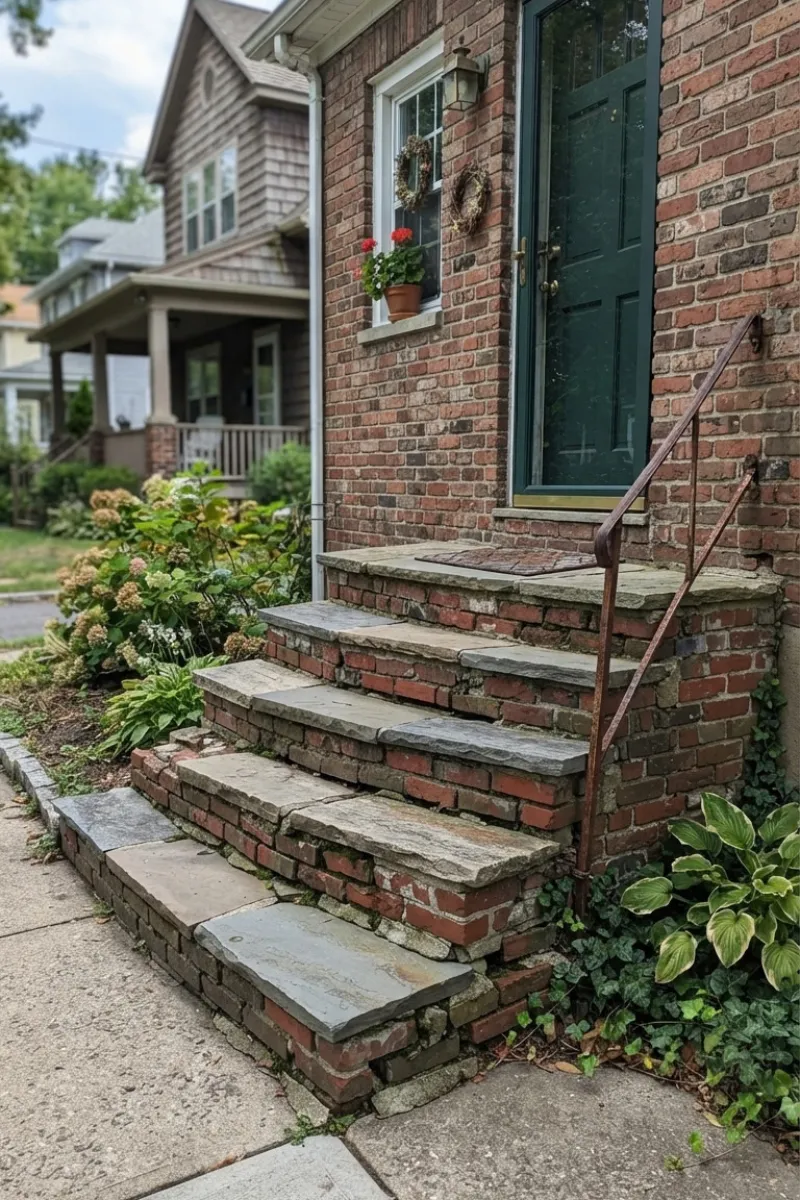
Uneven Steps or Stairs
One tread may begin sitting higher or lower than the next because of settlement, movement, or deterioration.
Uneven exterior stairs should be evaluated to determine whether the problem is limited to one step or affects the larger stoop structure.
Sinking or Settling Stoops
A stoop may gradually move or settle over time.
Signs can include
- Gaps beside the house
- Sloping landings
- Cracks through several steps
- Separation between masonry sections
- Uneven stair heights
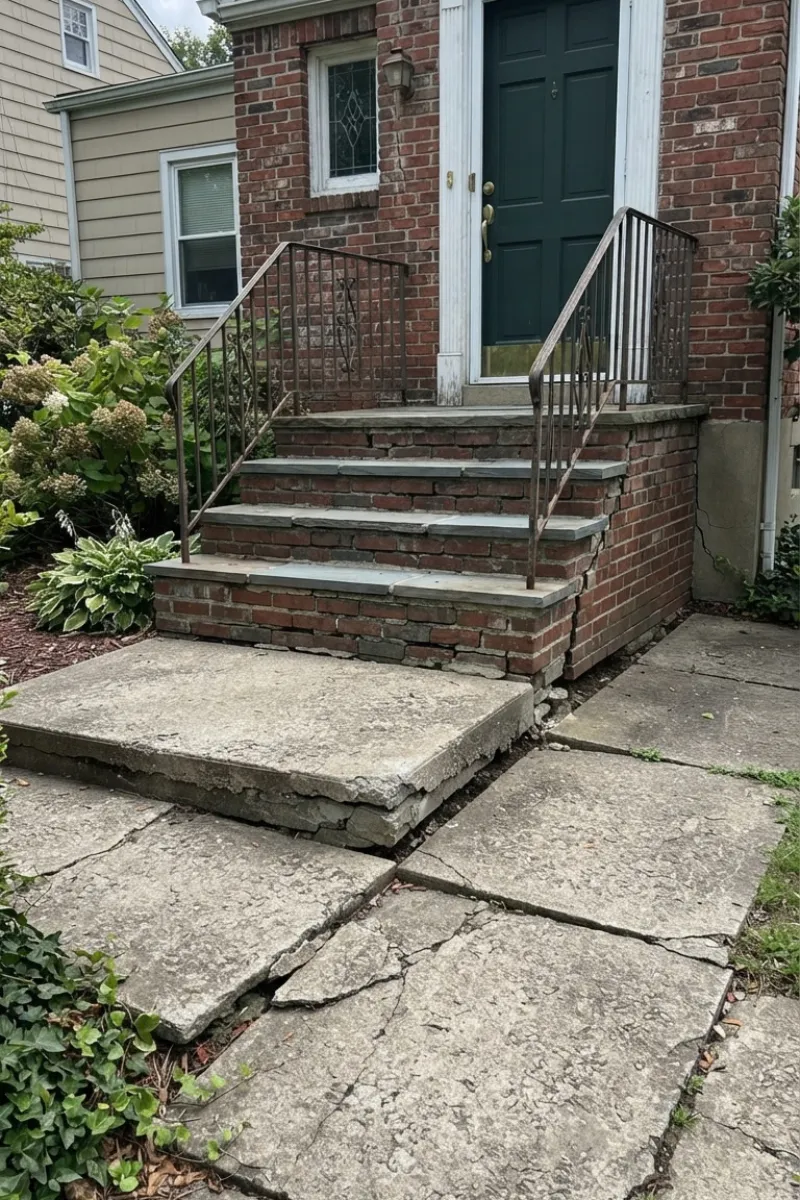
Damaged Treads & Risers
Treads and risers can develop
- Cracks
- Broken edges
- Loose masonry
- Surface deterioration
- Missing pieces
- Worn areas
Localized repairs may be possible where the surrounding structure remains stable.
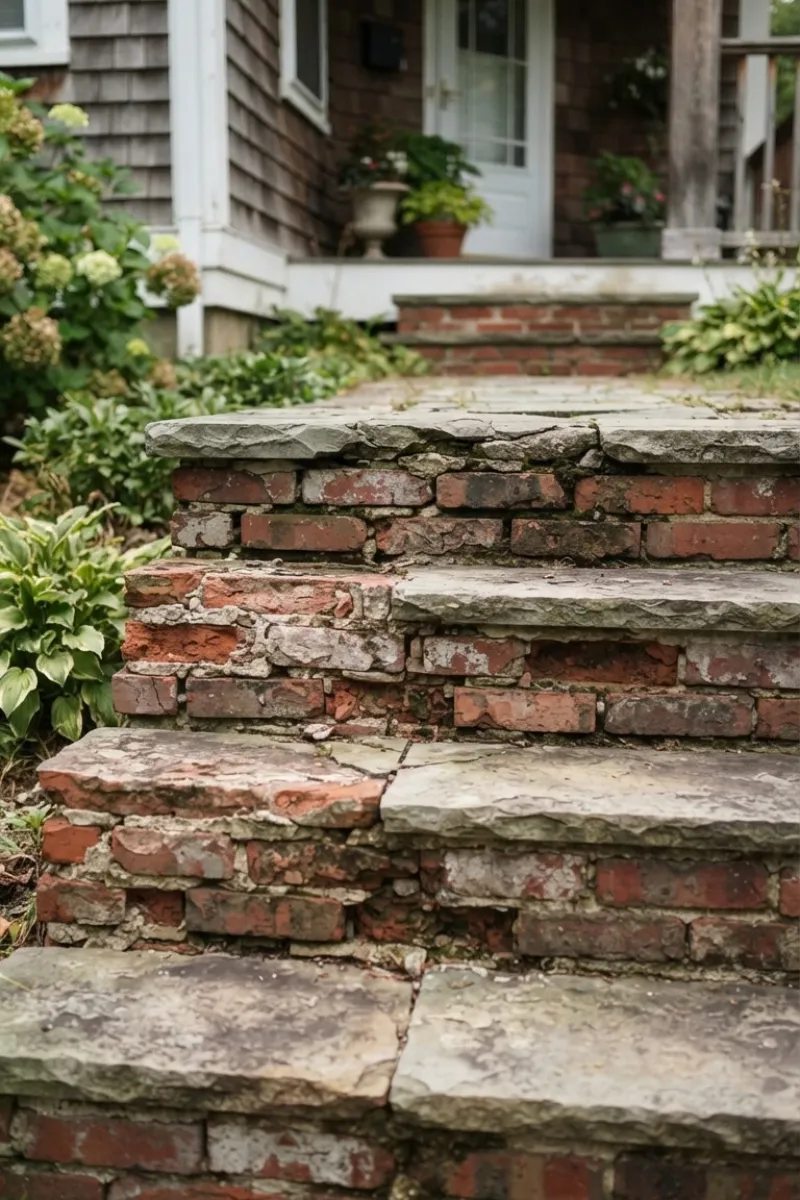
Chipped or Spalled Concrete
Concrete can begin breaking away at exposed surfaces or edges.
The repair depends on how deep the deterioration extends and whether the underlying step remains sound.
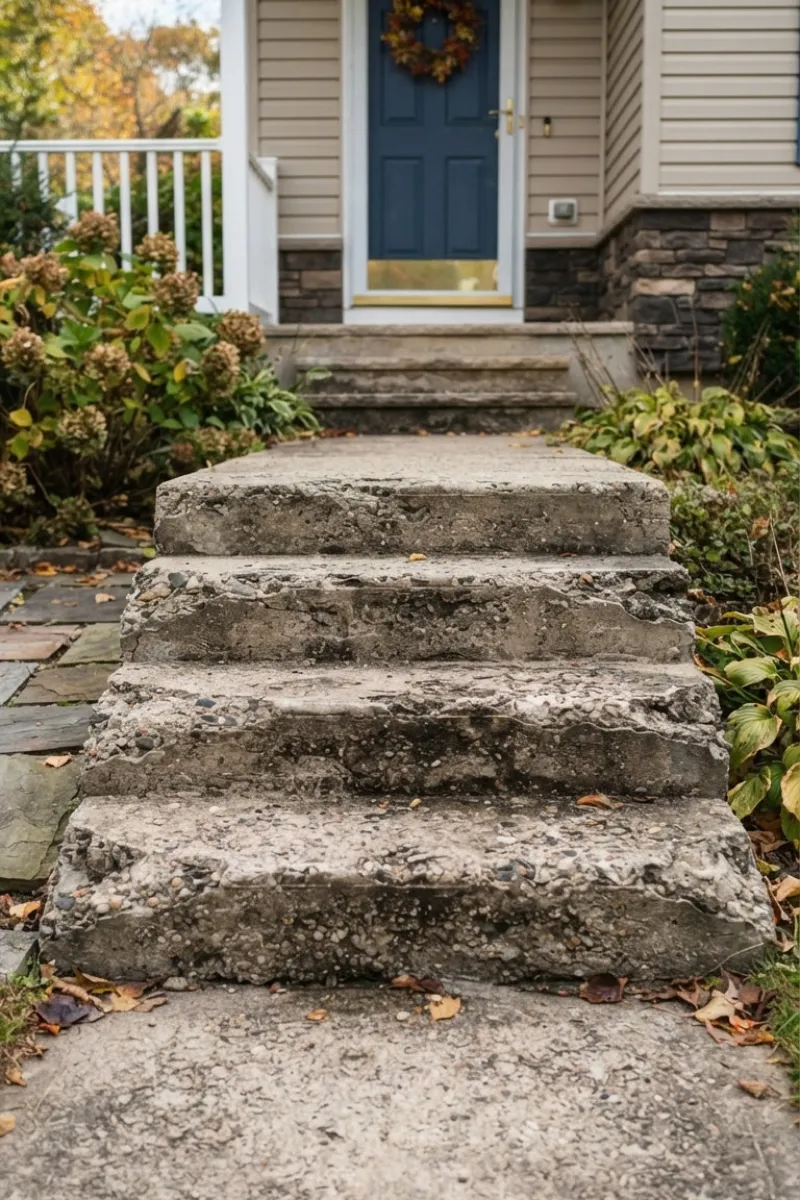
Water Collecting on the Landing
Standing water can contribute to surface deterioration and damaged mortar joints.
A landing that repeatedly holds water should be evaluated together with the surrounding slope and drainage conditions.
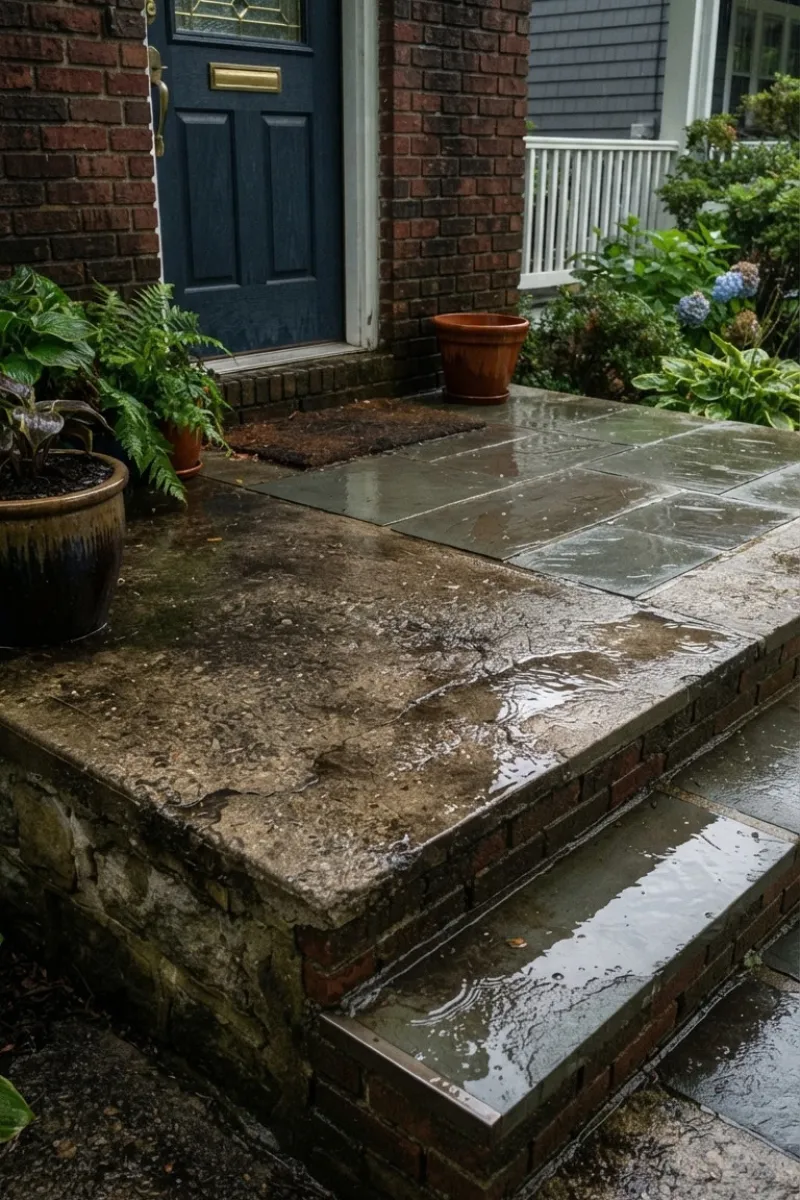
Understanding the Cause Helps Determine the Right Repair
What Causes Steps & Stoops to Deteriorate?
Visible damage is often only the symptom. Several conditions can contribute to cracked, loose, uneven, or deteriorated masonry steps.
Weather Exposure
Exterior steps are directly exposed to
- Rain
- Snow
- Ice
- Temperature changes
- Seasonal weather conditions
Repeated exposure can gradually affect concrete, stone, brick, and mortar.
Moisture in Cracks & Joints
Water can enter through cracks, open joints, and damaged masonry.
When materials remain wet repeatedly, deterioration may continue around the affected area.
Freeze-Thaw Conditions
Water that enters small cracks or masonry joints can expand when temperatures drop.
Repeated freezing and thawing can contribute to
- Cracking
- Surface deterioration
- Loose mortar
- Spalling
- Widening joints
Settlement & Movement
Changes beneath or around a stoop can cause sections to settle or shift.
This may lead to
- Uneven stairs
- Cracked landings
- Separation
- Shifted masonry
- Recurring cracks
If movement is causing the damage, repairing only the visible surface may not provide a lasting result.
Aging Mortar
Mortar joints naturally deteriorate over time.
Once joints begin failing, surrounding brick or stone may also become loose.
Drainage Problems
Water repeatedly reaching the steps, landing, or surrounding masonry can contribute to deterioration.
Where drainage is part of the problem, the source of the water should also be considered.
Previous Patch Repairs
Old surface patches may eventually fail if the underlying movement or damaged material was never properly addressed.
Repeated cracking in the same area is often a sign that the existing condition should be reassessed.
Everyday Wear
Exterior stairs experience regular foot traffic.
Treads, edges, joints, and landing surfaces can gradually wear, especially when materials have already begun deteriorating.
Repairs Matched to the Existing Condition
Our Steps & Stoops Repair Solutions
Not every damaged set of steps needs to be completely rebuilt. The appropriate solution depends on the extent of deterioration, movement, material condition, and stability of the existing structure.
Step & Stair Crack Repair
Localized cracks may be repaired where surrounding materials remain stable.
The repair should consider
- Crack size
- Crack location
- Whether movement is present
- Surrounding masonry condition
- Whether water is entering
Mortar Repair & Repointing
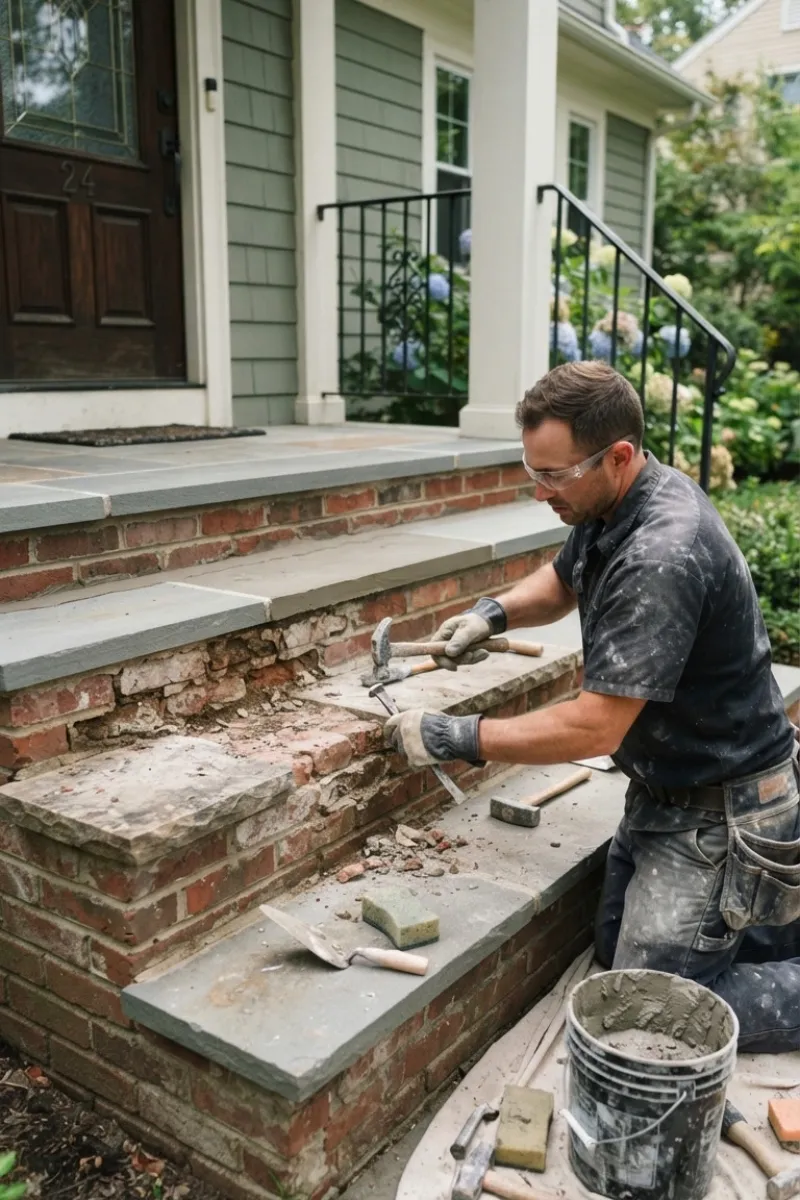
Where brick, block, or stone remains serviceable but mortar joints have deteriorated, repointing may restore weakened joints.
This can help address
- Missing mortar
- Recessed joints
- Open gaps
- Loose masonry
- Weathered joints
Concrete Step Repair
Depending on the condition, concrete repairs may address
- Cracks
- Chipped edges
- Surface deterioration
- Damaged corners
- Localized spalling
Where deterioration is widespread or structural movement is present, rebuilding may provide a more reliable result.
Brick Replacement
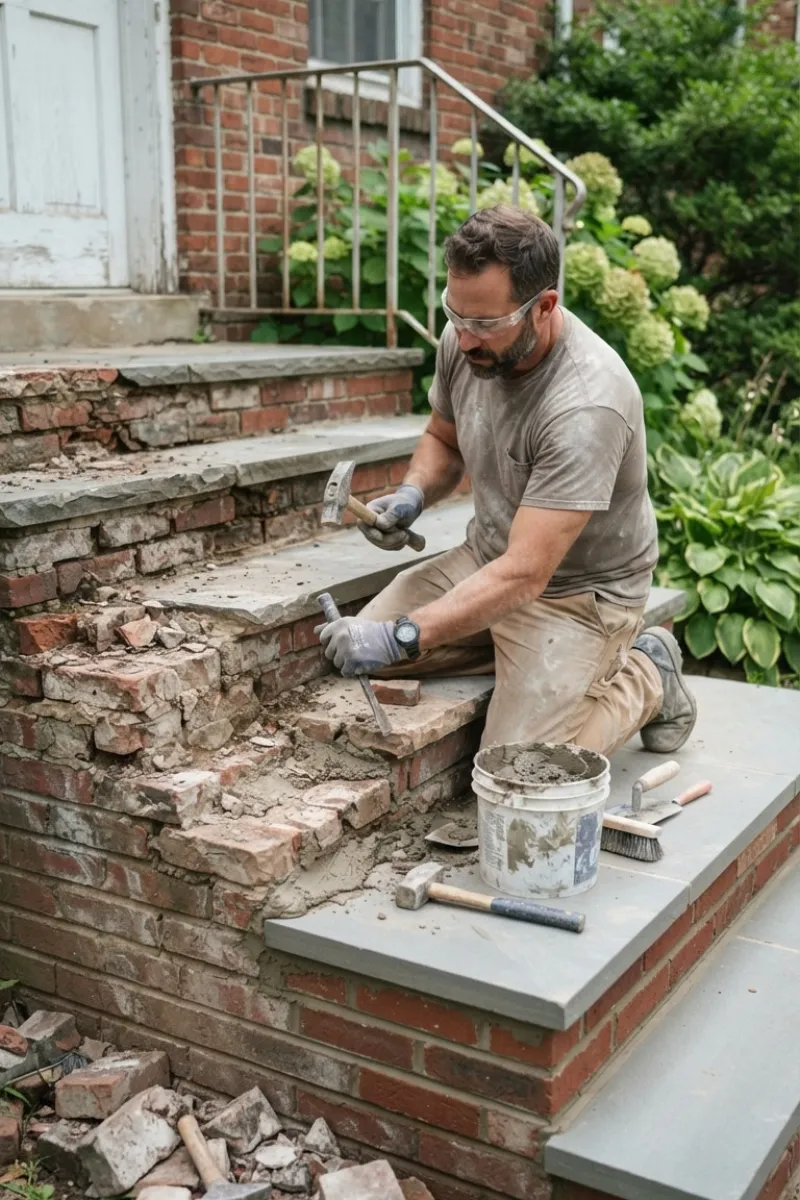
Damaged or broken bricks can often be selectively removed and replaced.
This may be appropriate where only a limited number of masonry units are affected.
Stone Resetting & Replacement
Loose or shifted stones may sometimes be reset rather than replacing the entire staircase.
Badly damaged stone can also be selectively replaced where necessary.
Localized Rebuilding
Where one section is too damaged for a smaller repair, that area may be rebuilt while stable surrounding sections remain in place.
Complete Steps or Stoop Rebuilding
Complete rebuilding may be appropriate where
- Multiple steps are loose
- Significant settlement is present
- Large areas of masonry have deteriorated
- The landing is unstable
- Previous repairs repeatedly fail
- The existing structure is no longer suitable for reliable repair
Tread & Riser Repair
Damaged stair components can sometimes be repaired individually.
This may involve restoring or replacing
- Treads
- Risers
- Step edges
- Masonry faces
- Supporting material
Landing & Stoop Repair
Stoop and landing repairs may include
- Crack repair
- Surface restoration
- Masonry replacement
- Joint repair
- Rebuilding damaged edges
- Correcting localized deterioration
Choosing the Right Level of Work
Repair or Rebuild?
One of the most common questions homeowners have is whether damaged steps can be repaired or need to be rebuilt.
The answer depends on the overall condition.
Repair May Be Appropriate When
- Damage is localized
- Most of the steps remain stable
- Only a few masonry units are damaged
- Mortar deterioration is limited
- Cracks are not continuing to widen
- The landing remains stable
- Movement is not progressing
In these situations, localized repair can preserve usable materials and avoid unnecessary reconstruction.
Rebuilding May Be Better When
- Several steps have shifted
- The stoop has settled significantly
- Large areas of masonry are loose
- Multiple treads or risers are damaged
- The landing is unstable
- Cracks continue reopening
- Previous patch repairs have failed
- The existing structure cannot support a dependable repair
Repair Solutions for Different Masonry Materials
Brick, Stone & Concrete Steps
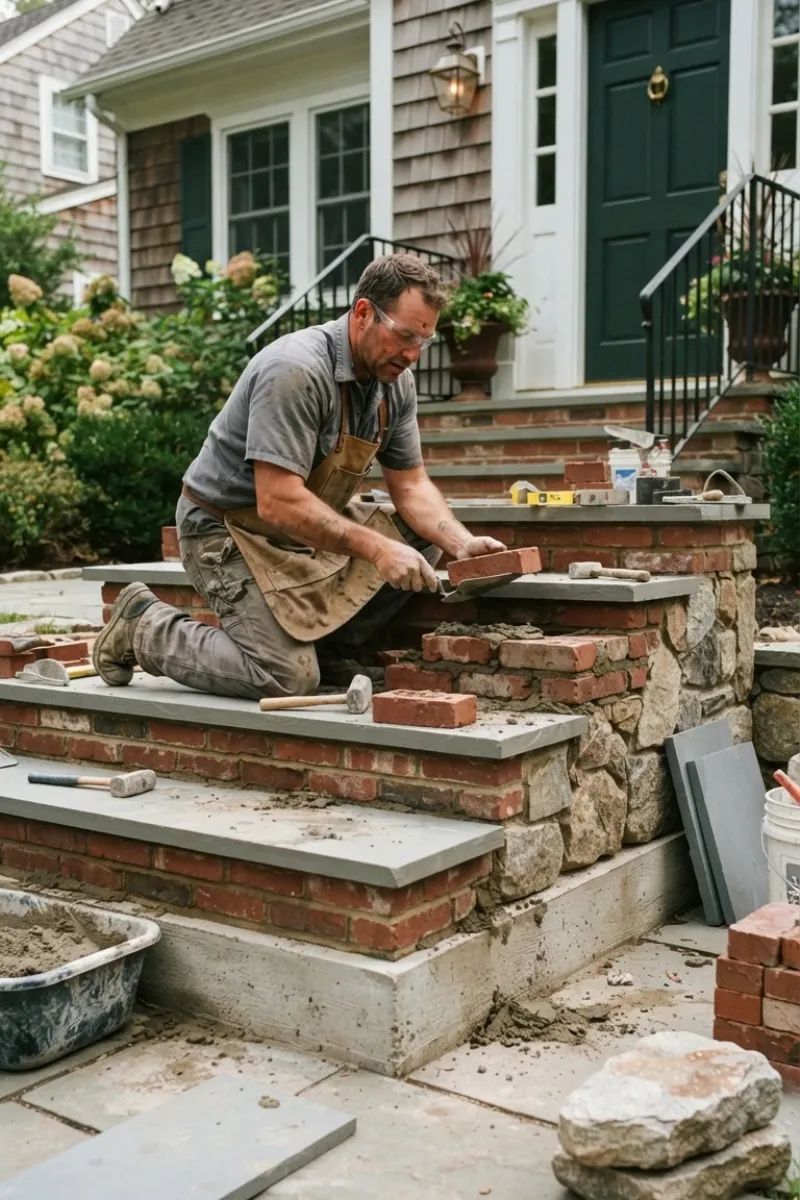
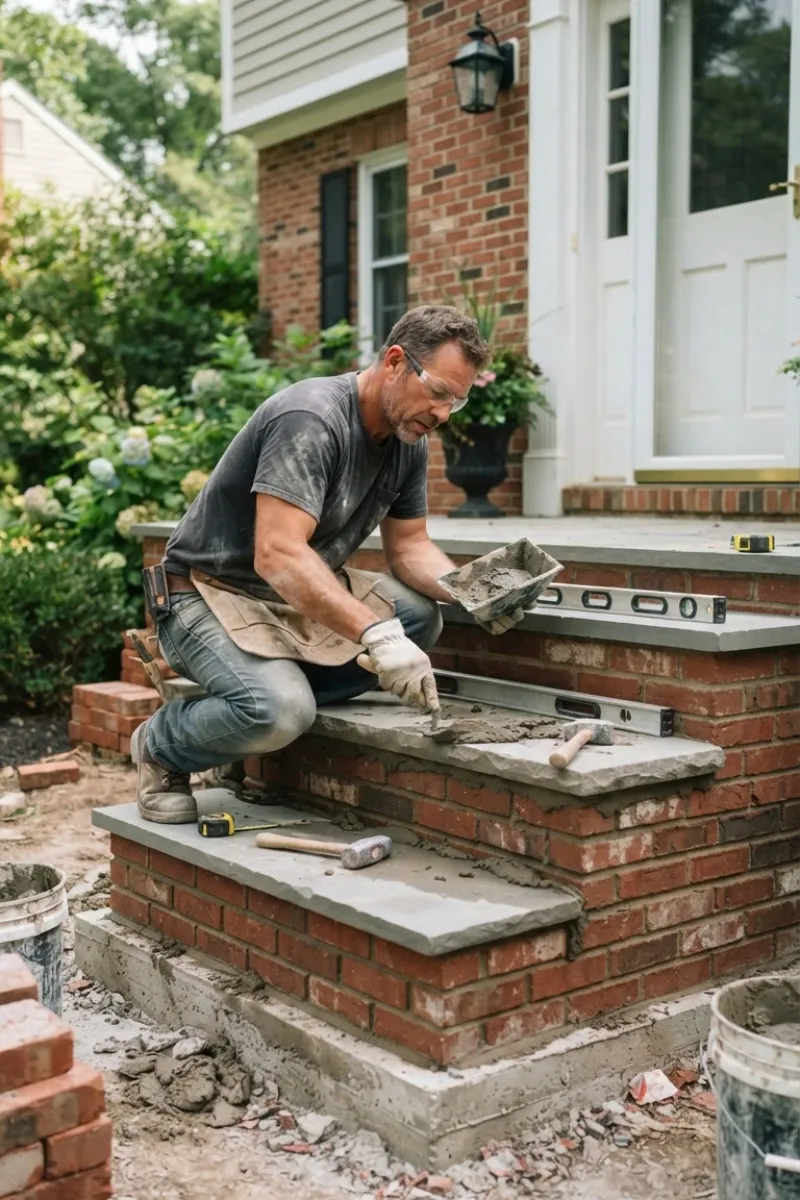
Different materials require different repair approaches. For a recent example, see our brick stoop rebuild in Bayonne.
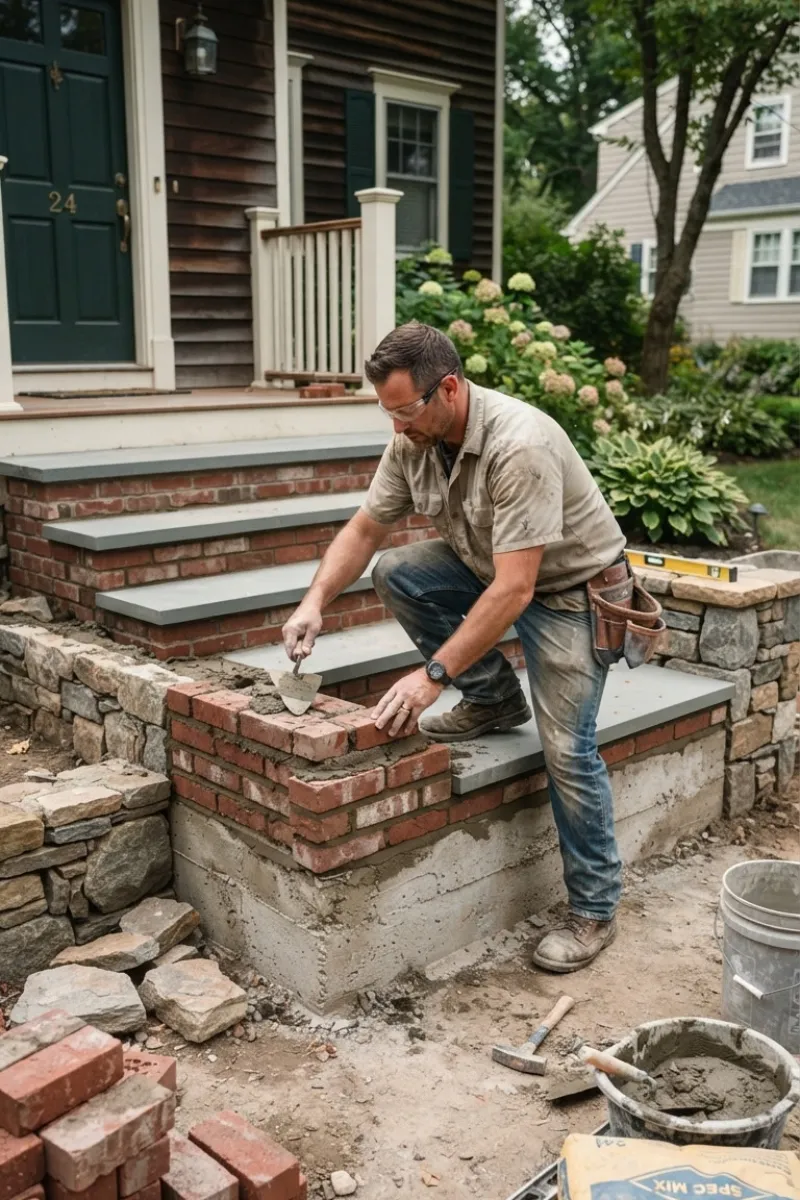
Brick Steps & Stoops
Brick is commonly used for front entrances and traditional masonry designs.
Common brick-step problems include
- Loose bricks
- Cracked units
- Deteriorated mortar
- Stair-step cracks
- Settlement
- Separation
Brick step repair may involve
- Repointing
- Brick replacement
- Resetting loose units
- Crack repair
- Localized rebuilding
Where most of the brick remains sound, selective restoration may be more practical than complete replacement.
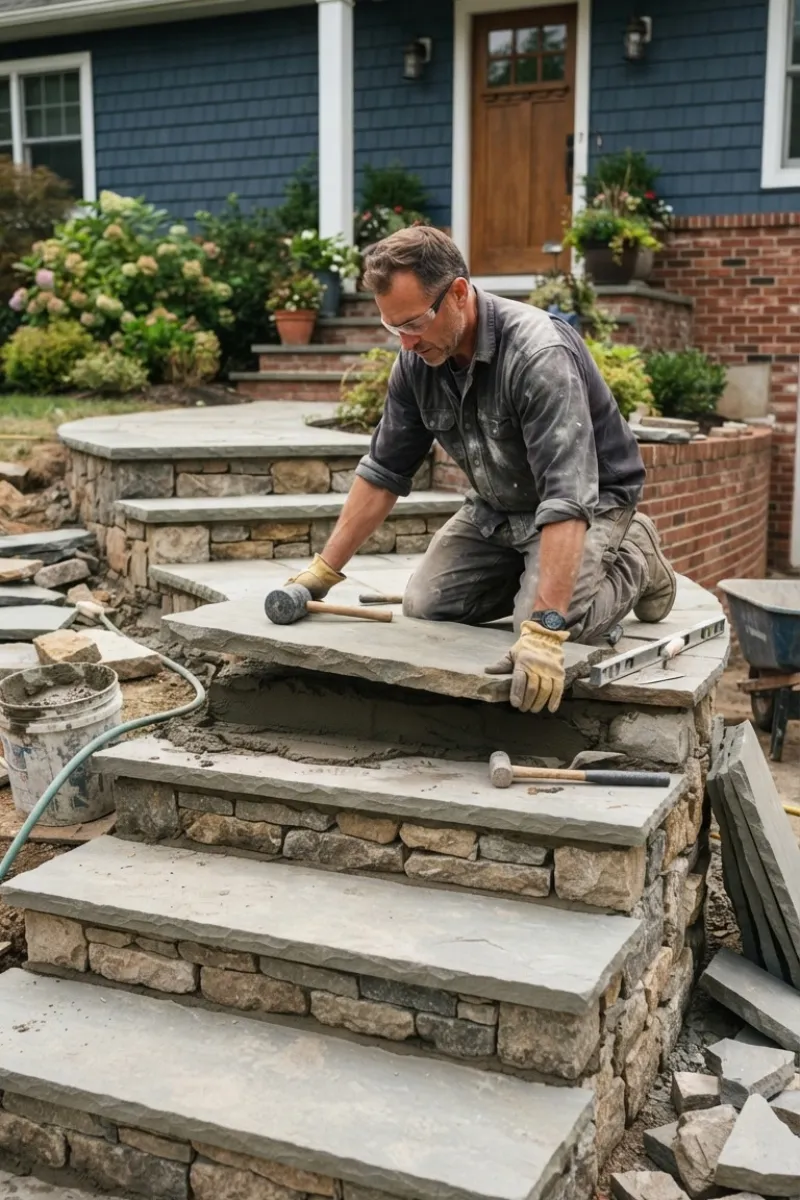
Natural Stone Steps
Stone steps provide a durable and substantial entrance when properly constructed and maintained.
Stone repairs may involve
- Resetting loose stone
- Repointing joints
- Replacing damaged pieces
- Restoring supporting masonry
- Rebuilding localized sections
Stable original stone can often remain while damaged areas are repaired.
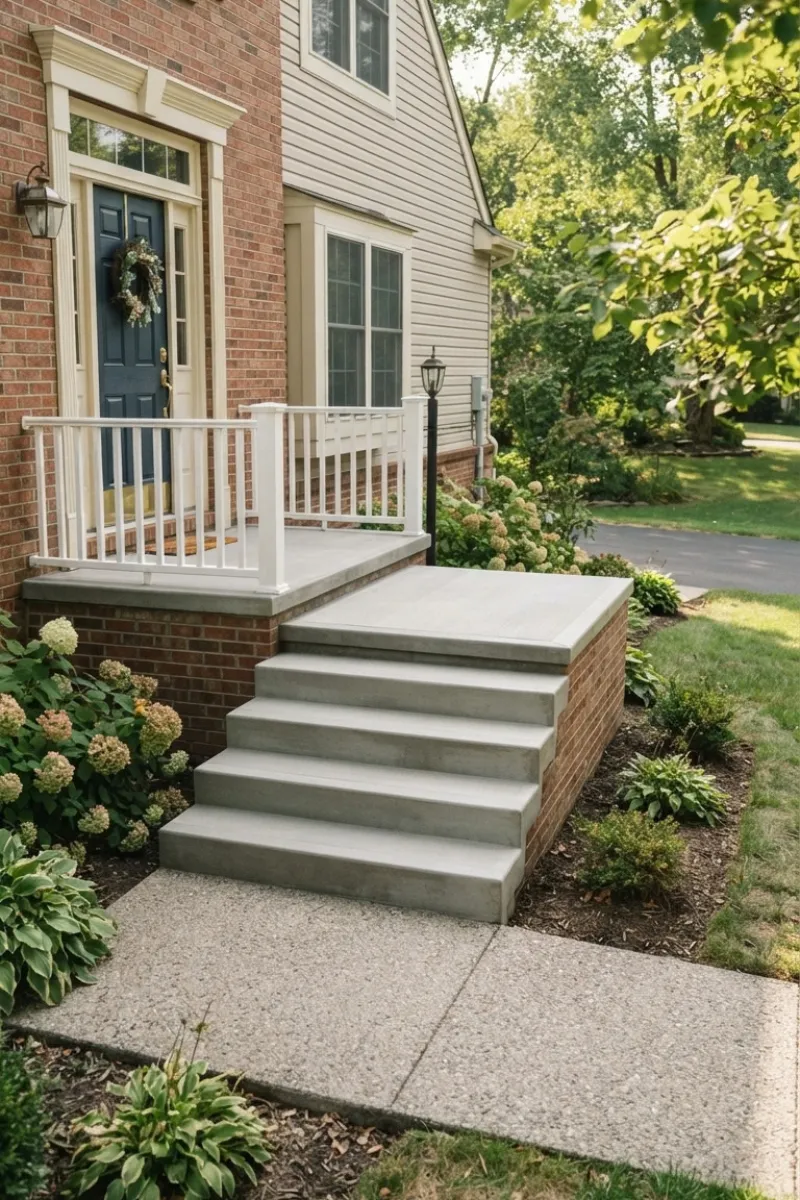
Concrete Steps
Concrete steps can develop
- Cracks
- Broken edges
- Surface deterioration
- Spalling
- Settlement
- Uneven sections
Localized concrete repairs may be appropriate where the underlying structure remains stable.
More significant deterioration may require partial or complete rebuilding.
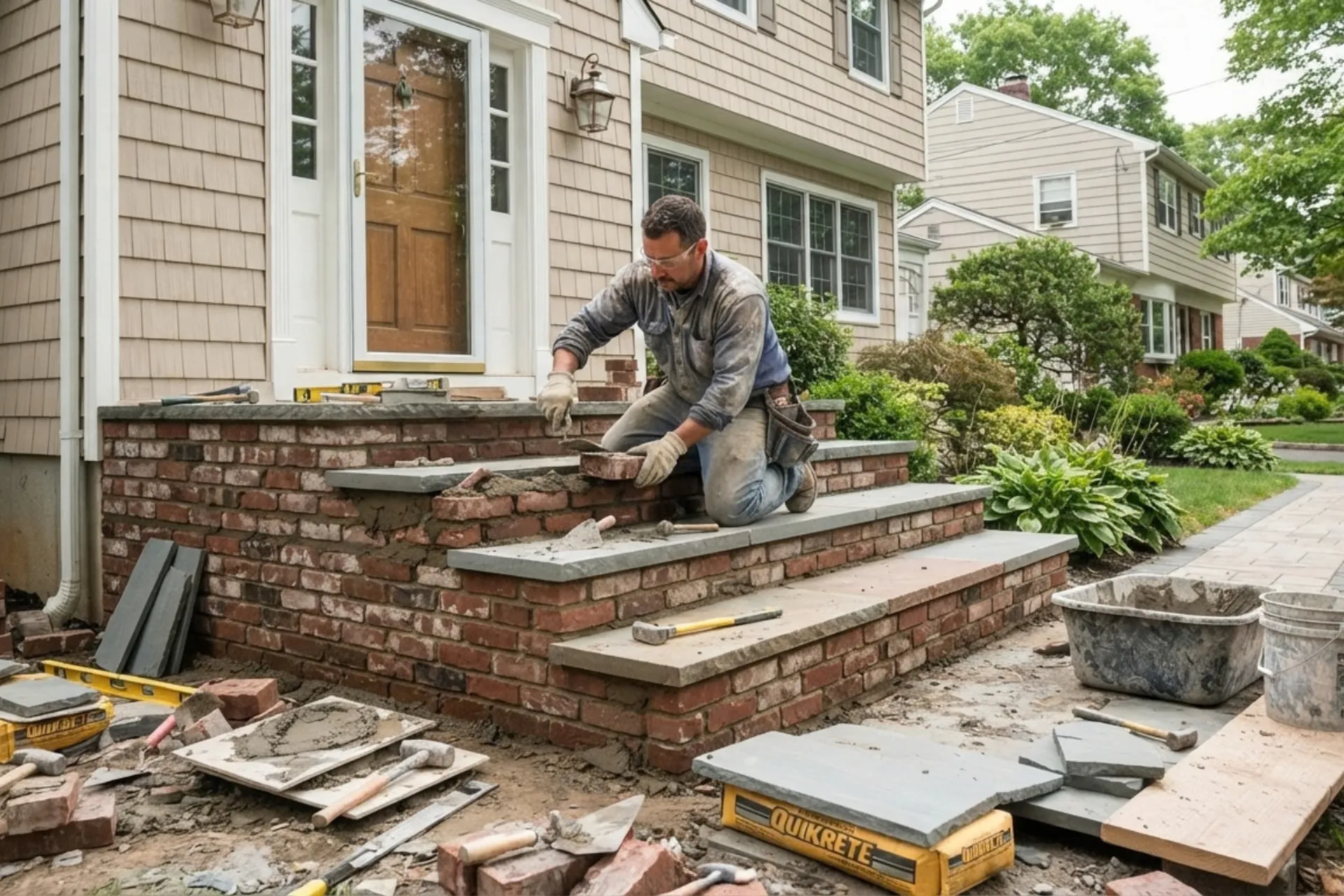
Mixed-Material Steps
Some entrances combine
- Brick and concrete
- Stone and concrete
- Brick and stone
- Concrete block with masonry finishes
Repairs should consider how the materials connect rather than treating every component the same way.
Our Steps & Stoops Repair Process
We make every project as smooth and stress-free as possible.
Step 01
Inspect the Damage
We begin by reviewing the visible condition of the steps, stairs, landing, and surrounding masonry.
Step 02
Identify the Material
The entrance may contain: Brick Stone Concrete Block Mortar Multiple masonry materials Each material may require a different repair approach.
Step 03
Look for the Cause
We consider whether the damage may involve: Material deterioration Settlement Moisture Loose mortar Movement Failed previous repairs
Step 04
Determine What Can Be Preserved
Stable materials do not always need to be removed. Where practical, sound sections can remain while damaged masonry is repaired or replaced.
Step 05
Repair or Rebuild the Affected Area
The work may involve: Localized repair Repointing Masonry replacement Concrete repair Stone resetting Partial rebuilding Complete rebuilding where necessary
Step 06
Review the Finished Entrance
The completed work should provide a solid, usable entrance that fits the surrounding property.
Masonry Experience From Repair to Rebuilding
Why Choose On Top Masonry & Construction?
Steps and stoops involve more than appearance. Loose brick, damaged stone, cracked concrete, failed mortar, settlement, and unstable sections each require a different approach.
Custom Design Options
Every property is unique, and so are its needs. We collaborate with you to design steps and stoops that perfectly align with your property’s style and functionality.
Safety and Durability
We prioritize safety and longevity in every project. Our steps and stoops are built to withstand heavy use and harsh weather conditions while maintaining their visual appeal.
High-Quality Materials
Using premium materials like natural stone, brick, and concrete, we ensure your steps and stoops are not only beautiful but also built to last.
Skilled Craftsmanship
Our experienced team combines traditional masonry techniques with modern innovation to deliver precise, high-quality results in every project.
Enhanced Curb Appeal
Well-designed steps and stoops can transform the look of your property, creating a polished and inviting first impression.
Our Steps & Stoops Projects Showcase


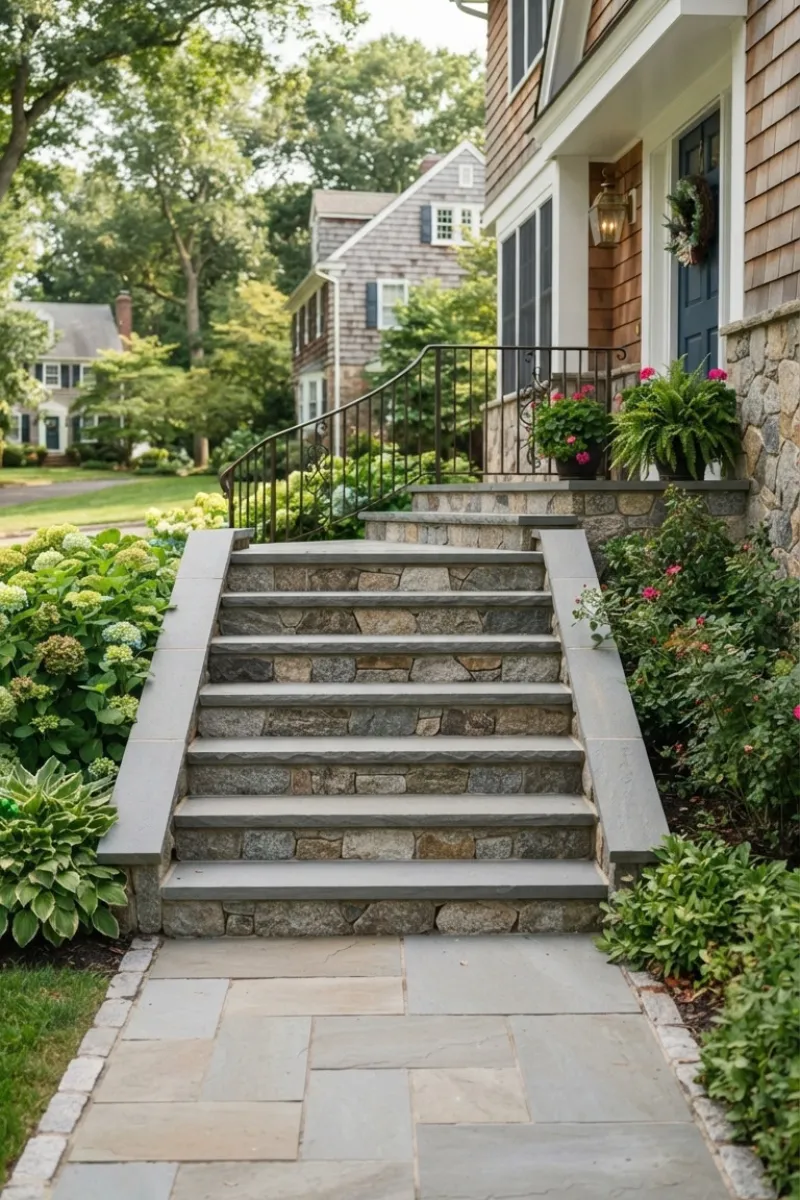
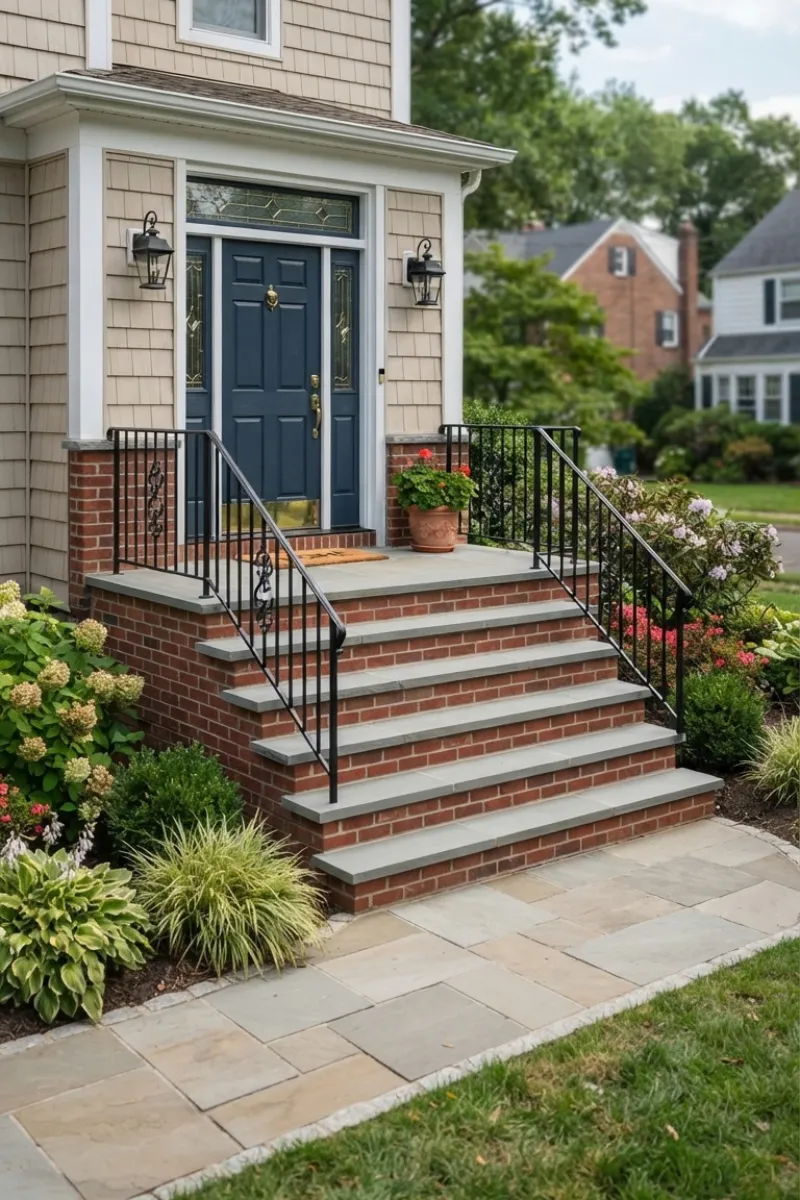
What Our Customers Say
Trusted Masonry & Construction Work Backed by Local Reviews
See what homeowners and property owners say about their experience with On Top Masonry & Construction.


 Trustindex verifies that the original source of the review is Google.
 Trustindex verifies that the original source of the review is Google.
 Trustindex verifies that the original source of the review is Google.
 Trustindex verifies that the original source of the review is Google.
 Trustindex verifies that the original source of the review is Google.
 Trustindex verifies that the original source of the review is Google.
 Trustindex verifies that the original source of the review is Google.
Additional Solutions for Exterior Masonry
Related Masonry Services
Problems around steps and stoops can sometimes connect with other masonry areas.
Need Steps or Stoops Repaired?
Cracked steps, uneven stairs, loose masonry, deteriorated mortar, and sinking stoops should be repaired according to the actual condition rather than covered with temporary patches.
On Top Masonry & Construction provides professional step repair, stair repair, stoop repair, restoration, rebuilding, and installation using brick, natural stone, concrete, and other masonry materials.
We serve homeowners in Morristown, Bayonne, New Brunswick, Lakewood, Montclair, Bridgewater, Old Bridge, Southampton Township, Toms River, and nearby areas.
Contact our team to discuss your entrance and request an estimate.
Frequently Asked Questions About Steps & Stoops
Yes.
Many cracked steps can be repaired where surrounding materials remain stable and movement is not continuing.
More extensive cracking or settlement may require a larger repair or rebuilding.
Yes.
Loose or damaged bricks can often be reset or replaced while surrounding masonry remains in place.
Deteriorated mortar joints may also require repointing.
Yes.
Stone-step repairs may include resetting loose stones, replacing damaged pieces, repairing mortar joints, and rebuilding localized areas.
Many concrete stair problems can be repaired when damage is localized.
Extensive deterioration or significant movement may make rebuilding more practical.
A stoop can settle when supporting conditions beneath or around it change.
The appropriate repair depends on how much movement has occurred and whether the structure remains stable.
Mortar can deteriorate because of age, moisture, weather exposure, movement, or previous repairs.
The surrounding masonry should also be evaluated before repointing.
Localized damage can often be repaired.
Rebuilding may be more appropriate where several steps have moved, masonry is badly deteriorated, settlement is significant, or previous repairs repeatedly fail.
It depends on the cause.
A localized damaged step may be repairable, while settlement affecting several stairs may require more extensive work.
Yes.
On Top Masonry & Construction provides new exterior steps and stoop installation as well as repair, restoration, and rebuilding services.